Balbriggan: A Brief History
Balbriggan has a rich and fascinating history spanning from prehistoric settlement through to its transformation as a modern coastal town. From its earliest archaeological roots to its golden age as a centre for fine hosiery production, the story of Balbriggan is one of resilience, innovation, and community pride. Explore the different chapters of our town’s heritage below.
Early Settlement & Archaeology
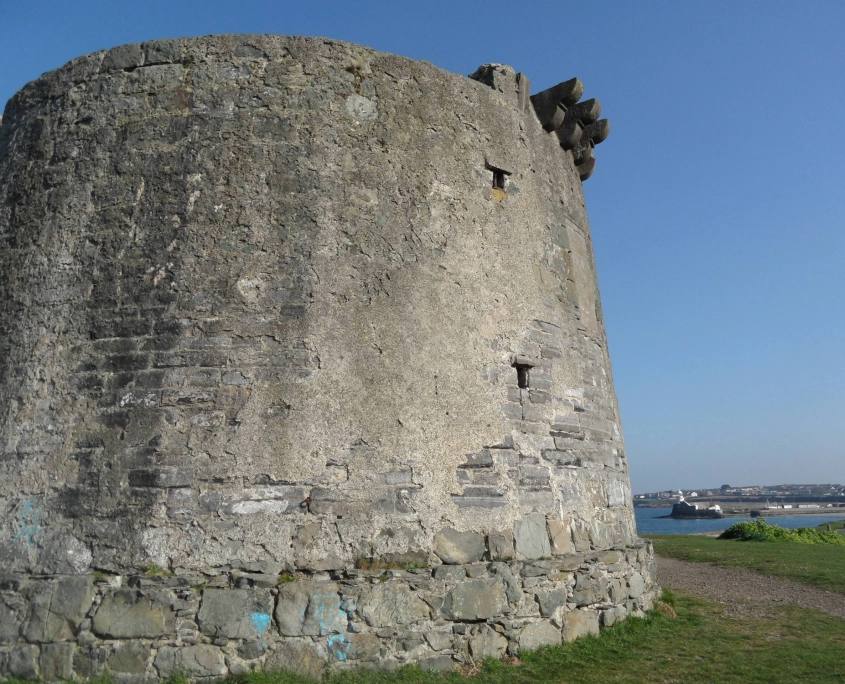
Balbriggan’s strategic coastal location has attracted human settlement since the earliest times. The Bremore passage tombs, located north of the town, are thought to predate even Newgrange and Knowth in the Boyne Valley. Archaeological excavations near Hamlet Lane uncovered Balbriggan’s first Neolithic house, dating back over 5,000 years, along with pottery, stone tools, and a polished stone axehead. The early medieval period saw the establishment of Lann Bechaire (Church of the Beekeeper) at Bremore, founded by Saints Molaga and Mo Domnóc. A ringfort at Stephenstown, occupied between the 7th and 10th centuries, and an extensive settlement at Flemington with advanced water management systems and imported pottery reveal a sophisticated early medieval community.
Balbriggan Lighthouse
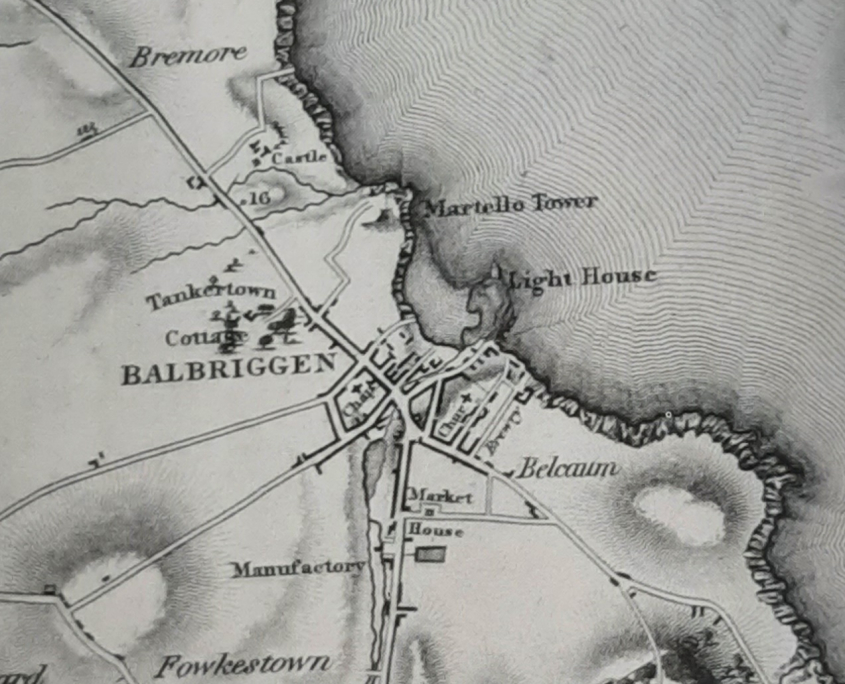
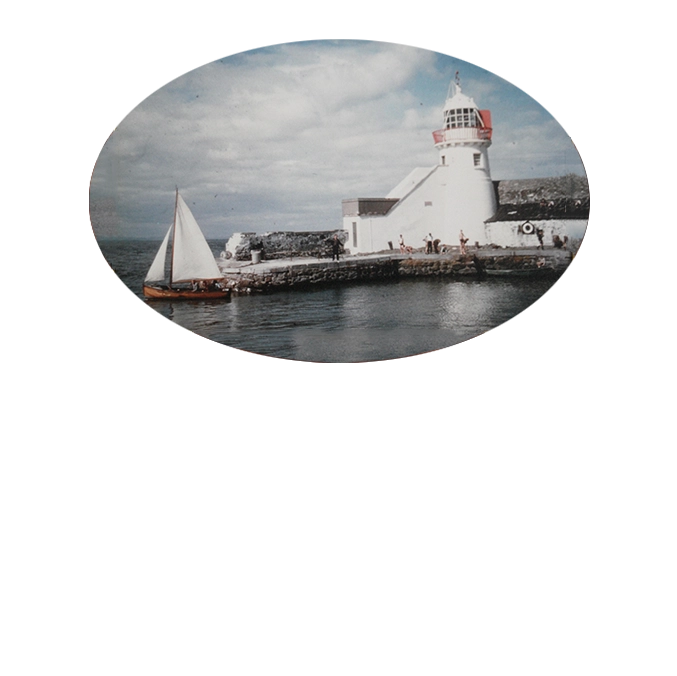
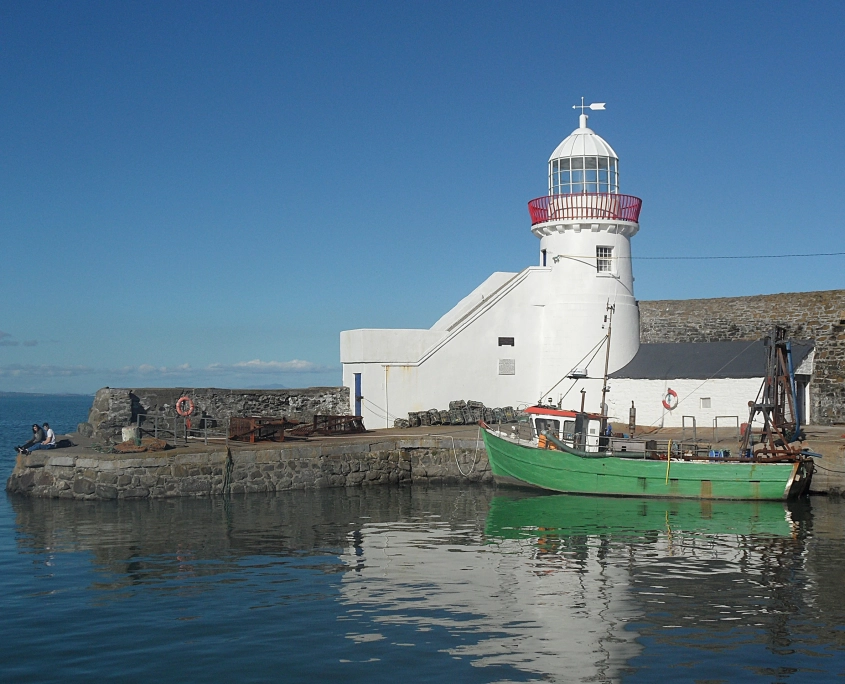
Built in the 1760s at the end of a 600-foot pier, Balbriggan Lighthouse guided vessels safely to port for over two centuries. Originally lit by candles in its eight-foot lantern, the lighthouse was upgraded to oil lamps with reflectors following recommendations from its first keeper, Rev. George Hamilton. When Rockabill Lighthouse was established in 1860, Balbriggan became a minor harbour light. Today, this iconic structure—with its distinctive glass and bronze dome—remains a cherished landmark and symbol of our maritime heritage. The lighthouse also houses an RNLI Boathouse built in 1889, a testament to Balbriggan’s seafaring history.
Railways
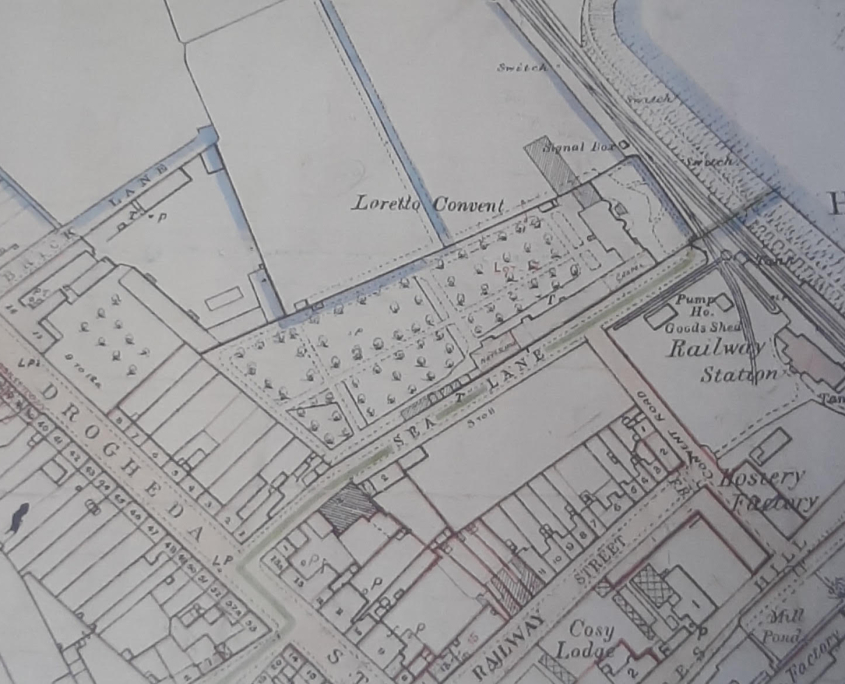
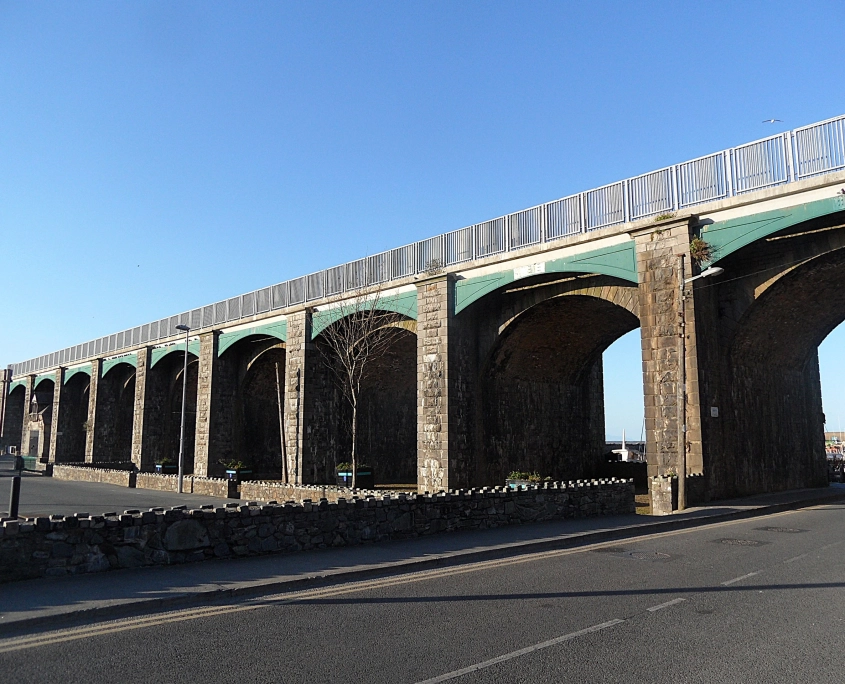
The Dublin–Drogheda Railway transformed Balbriggan when construction began in 1838 under engineer John Macneill. The Balbriggan Viaduct, completed in 1844 and measuring 590 feet across with 11 arches, became the single most important engineering feat on the line. The railway’s arrival in 1844 proved vital for local industry—three railway lines ran into what is now the station carpark, allowing Balbriggan’s factories to export goods worldwide. Coke ovens supplied fuel for the trains, and cattle were loaded for Dublin markets. Balbriggan Railway Station was primarily a goods station throughout the nineteenth and twentieth centuries, cementing the town’s role as an industrial hub.
Coastal Industries
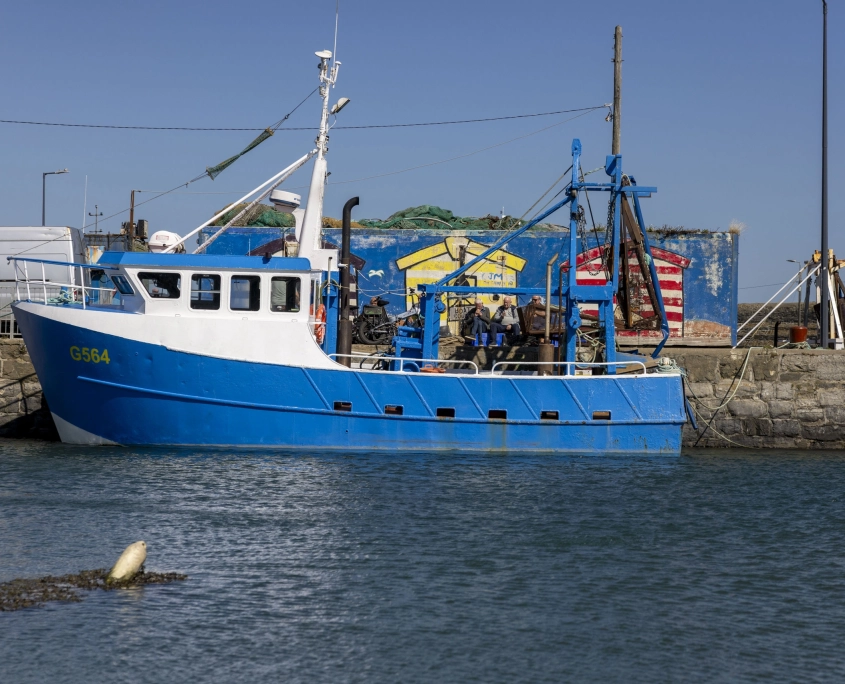
Balbriggan’s natural harbour attracted maritime development from the mid-eighteenth century onwards, particularly under the Hamilton family. The fishing industry flourished in the late 1700s, with herring becoming a major catch. A saltworks operated alongside the harbour to preserve fish for export. Work on Balbriggan Pier commenced in 1762, recognising the harbour’s strategic importance as the only safe haven between Dublin and Carlingford. A second pier was added in 1826–29. By the 1830s, the port was importing coal, culm, rock salt, and slates while exporting corn and cattle, making it a vital commercial centre for the region.
Balbriggan and the Textile Industry
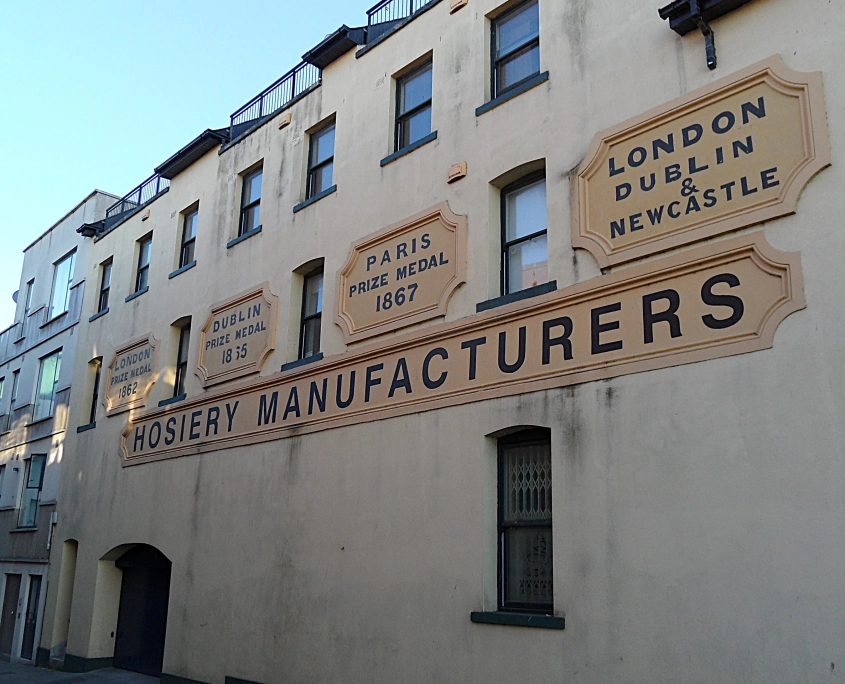
The construction of a purpose-built hosiery mill in the 1780s by the Smyth family transformed Balbriggan into an industrial centre. Balbriggan cotton — fine hosiery stockings and undergarments — became a globally recognised brand, exported across the British Empire and to North America. The word “balbriggans” entered the English language as a common noun for lightweight cotton underwear and appears in American literature well into the 20th century. The hosiery industry never fully recovered after the events of 1920, and broader decline in textile manufacturing left the town quieter through much of the late 20th century, though pride in this unique heritage endures.

The Sack of Balbriggan
During the events of 20 September 1920, when Balbriggan became the focus of international attention. Following the fatal shooting of RIC Constable Peter Burke, troops from nearby Gormanstown Barracks looted and burned buildings in the town. Two local men, Seamus Lawless and Sean Gibbons, were taken for questioning and found dead the following morning. An exhibition was shown at County Hall, Swords, in September 2020 to mark the centenary.

Bremore Castle
Located near King’s Strand to the north of Balbriggan, Bremore Castle stands as a reconstructed fortified house with deep medieval roots. Once the manorial centre of the Anglo-Norman Barnwell family, this impressive structure has undergone significant restoration in recent decades. The Bremore Castle complex includes the ruins of St Mologa’s church and graveyard, boundary walls, and farm structures—all protected as archaeological monuments and heritage structures. The castle’s transformation from a single-storey ruin within a farmyard to the imposing edifice visible today reflects the community’s dedication to preserving this important piece of our local heritage.
Balbriggan: Historical Maps